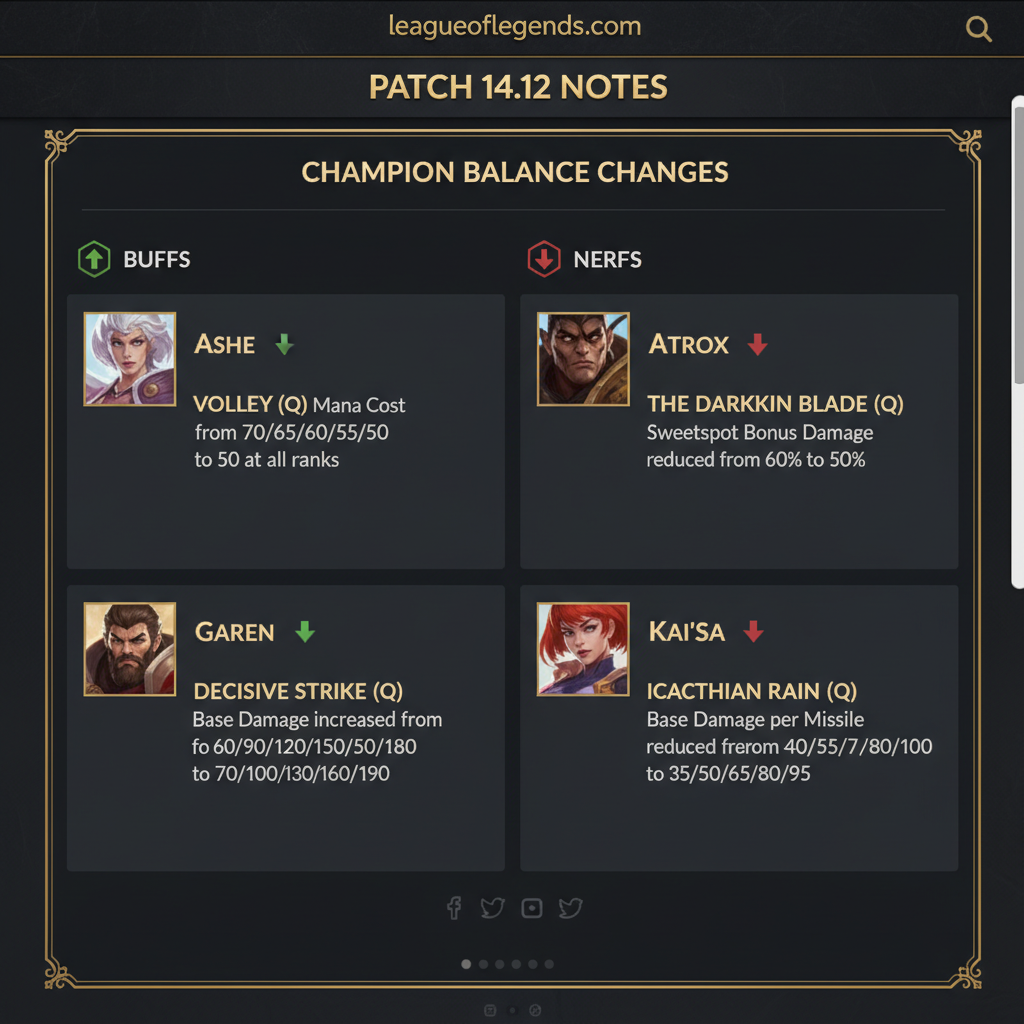
Every two weeks, Riot drops a wall of text that decides whether your main is broken or unplayable. League of Legends patch notes are the single most important resource for climbing ranked, and most players either skip them entirely or skim the wrong sections.
Last updated: April 14, 2026, patch 26.7
What Are League of Legends Patch Notes and Why Should You Care?
League of Legends patch notes are Riot’s official changelog for every update to the game. They cover champion buffs and nerfs, item adjustments, rune tweaks, bug fixes, new skins, and system-level changes to ranked, matchmaking, or map mechanics. Reading them before you queue ranked is the difference between abusing a buffed pick and getting blindsided by a gutted one.
I learned this the painful way. Back in patch 26.4, I queued five Karma support games without checking notes. She’d been nerfed the patch before, and I went 1-4 wondering why my shields felt like tissue paper. Five minutes of reading would’ve saved me 70 LP.
Patch notes aren’t optional homework. They’re your cheat sheet.
How Are LoL Patch Notes Structured?
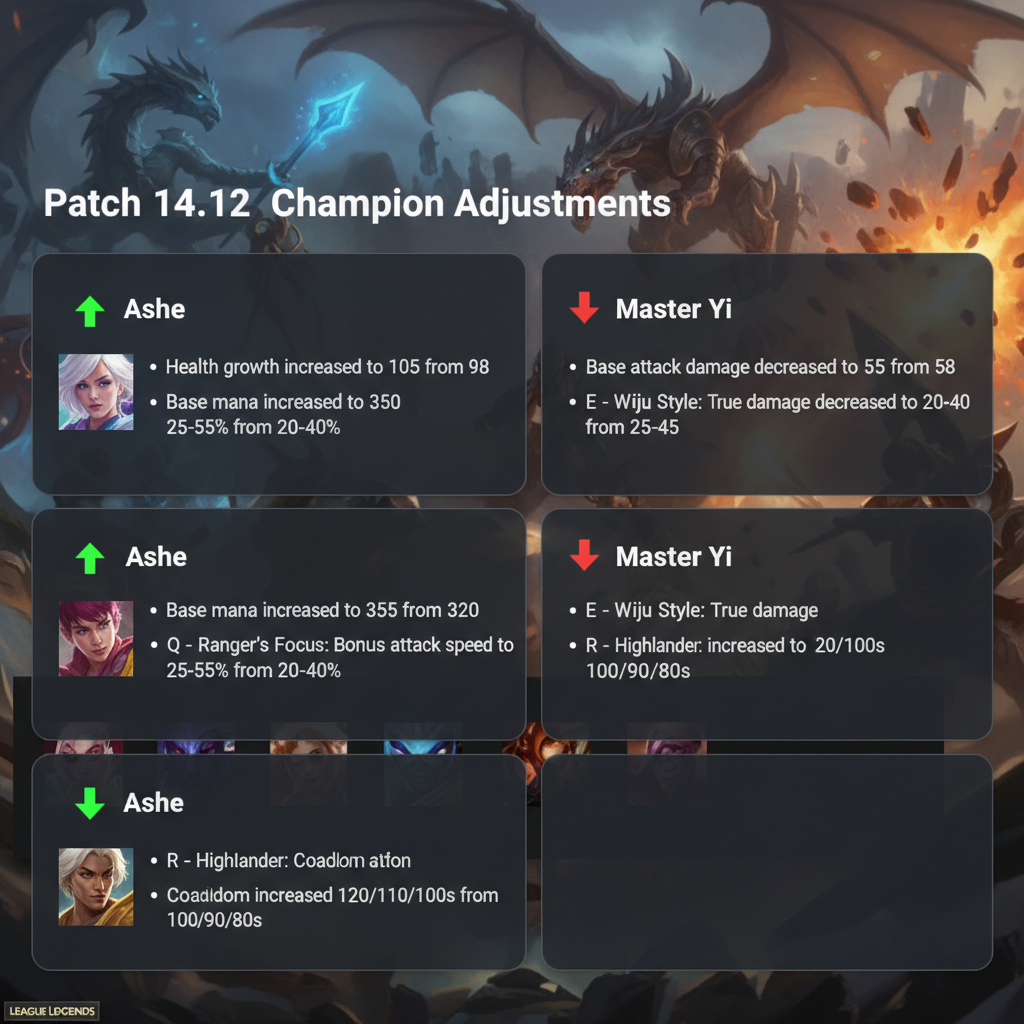
If you’ve ever opened the official patch notes page and felt lost, you’re not alone. The format is consistent once you know where to look. Here’s the standard layout Riot uses, pulled straight from the LoL Wiki’s Manual of Style for Patch Notes:
Patch Highlights sit at the top. This is Riot’s curated summary of the biggest changes. Think of it as the TL;DR. In patch 26.7, the highlights covered April Fools’ skins and the Demacia Rising story conclusion.
Champion Changes are the meat. Each champion entry gets labeled as a buff, nerf, or adjustment. You’ll see the specific ability affected, the old value, an arrow, and the new value. For example, in 26.7, Cassiopeia’s base mana went from 450 to 480 and her E scaling jumped from 112 to 120 at max rank. That’s a buff. Graves losing 2 base AD (68 down to 66)? Nerf.
Item and System Changes follow. These are easy to miss but often matter more than individual champion tweaks. Patch 26.7 completely disabled the support farming gold restriction. That’s huge for roaming supports.
Bug Fixes come last. Most people skip these. Don’t. Sometimes a “bug fix” is actually a shadow nerf that kills an interaction you’ve been abusing.
How to Tell If a Change Actually Matters
Not all changes are equal. A 2 AD nerf on Graves sounds tiny. Sometimes it is. But here’s the thing: for a champion who relies on early auto-attack trades in lane, 2 AD changes every single trade from level 1 onward. It compounds.
Here’s my quick filter for separating noise from signal:
- Base stat changes (AD, HP, armor, mana) affect every stage of the game. Always significant.
- Ratio changes only matter at certain item breakpoints. A scaling buff on a champion that never builds AP? Irrelevant.
- Cooldown changes are the sleeper picks. Five seconds off an ultimate at level 16 doesn’t matter. Five seconds off at level 6? That wins lanes.
- Numbers under 5% are usually micro-adjustments. Numbers over 10% are Riot saying “we messed up.”
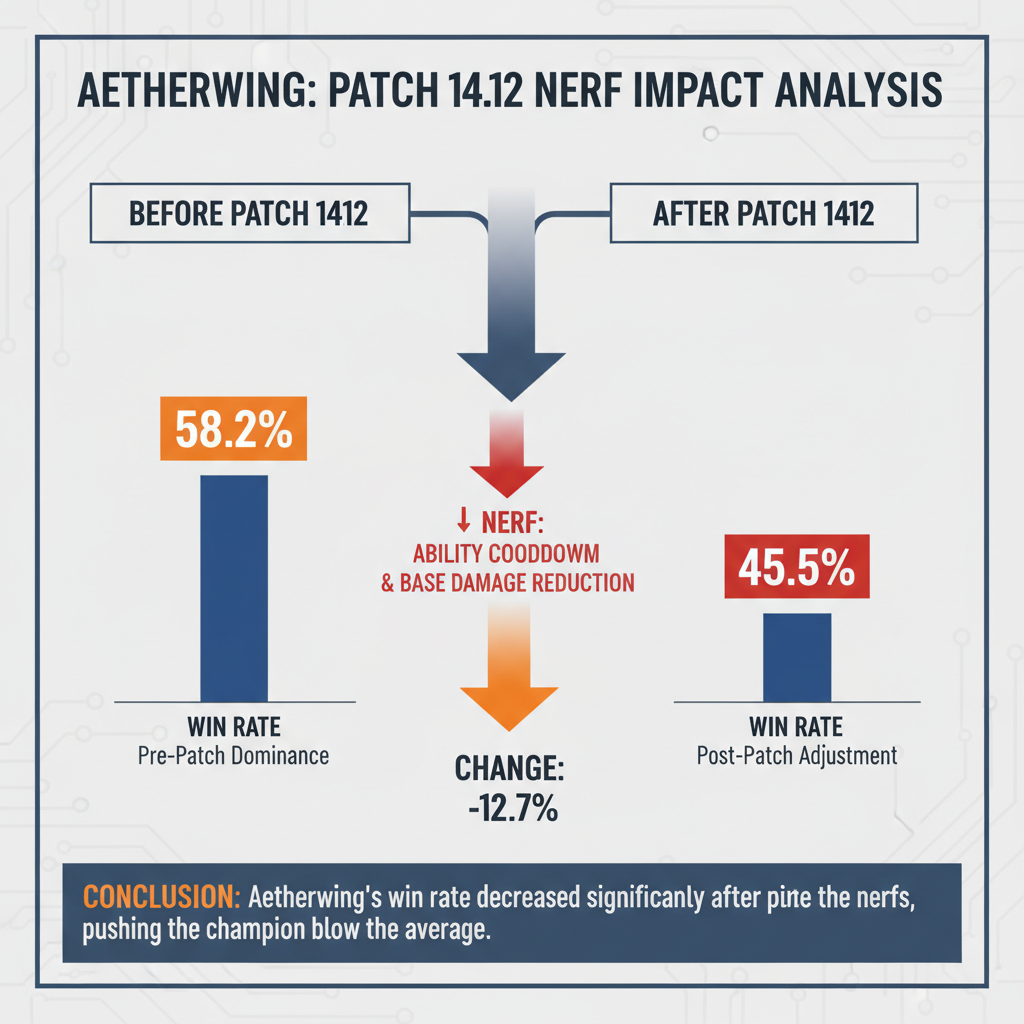
Take Veigar in patch 26.7. His R cooldown went from 100/80/60 to 120/90/60. That’s a 20-second increase at rank 1. Early game, that’s a full teamfight’s worth of time where Veigar can’t delete someone. Late game? No change at all. Context matters.
I think Riot’s been too conservative with mage buffs this season, and the Cassiopeia changes in 26.7 prove it. She needed those numbers three patches ago. If they keep this pace, control mages won’t be properly viable until Season 2 hits (the patch notes for 26.7 literally said “our focus shifts increasingly toward the season two update next month”).
Where to Read the Current LoL Patch Beyond Riot’s Page
The official notes are the source of truth, but they don’t tell you what the changes mean in practice. For that, you need context. Here are the resources I actually use:
Mobalytics Patch Breakdown adds win-rate data from the previous patch next to each champion change. When Riot nerfs Karma’s empowered E shield from 200 to 165 at max rank, Mobalytics shows you her 54% win rate that justified it. That context turns raw numbers into decisions.
u.gg and op.gg let you check real-time win rates after a patch drops. I usually wait 48 hours for sample sizes to stabilize, then compare. If a “nerfed” champion still sits at 52%, the nerf didn’t land. If a “buffed” champion drops, the buff wasn’t enough to offset a bad meta.
PBE Preview Coverage from outlets like Dexerto and Sportskeeda gives you a week of advance warning. Patch 26.8 previews are already circulating with Viego buffs and more Karma nerfs. If you’re a Karma one-trick, that’s your cue to start practicing a backup.
If you’re looking to understand how ranked works in LoL alongside these patch changes, knowing the meta before you queue is half the battle.
How to Use Patch Notes to Actually Climb
Reading isn’t enough. You need a system. Here’s mine:
Patch day (Wednesday): Spend 10 minutes reading. Highlight anything that touches your champion pool or your most-played role. Check if any items you build got changed.
Day 2-3: Play normals on anything that got buffed. Feel the difference. I spent two games on Rell after her 26.7 E movement speed buff (10% up to 15% at base), and the roam timing felt noticeably faster. That told me more than the patch notes ever could.
Day 4-5: Check win rates on u.gg. By now there’s enough data to spot which changes actually moved the needle. If something’s spiking, it’s time to abuse it in ranked before the rest of the ladder catches on.
Week 2: The meta has settled. This is when you commit. If you identified a sleeper buff early, you’ve got a full week of LP farming before the next patch resets everything. When I spotted Rell’s buff on day one of 26.7, I spammed her for 14 games and climbed from Gold 2 to Plat 4. Most people didn’t realize she was strong until week two.
If you’re struggling to climb despite reading notes, sometimes a LoL rank boosting service can help you get past a plateau while you develop your patch-reading habits. Or grab a fresh LoL smurf account to practice new meta picks without risking your main’s LP.
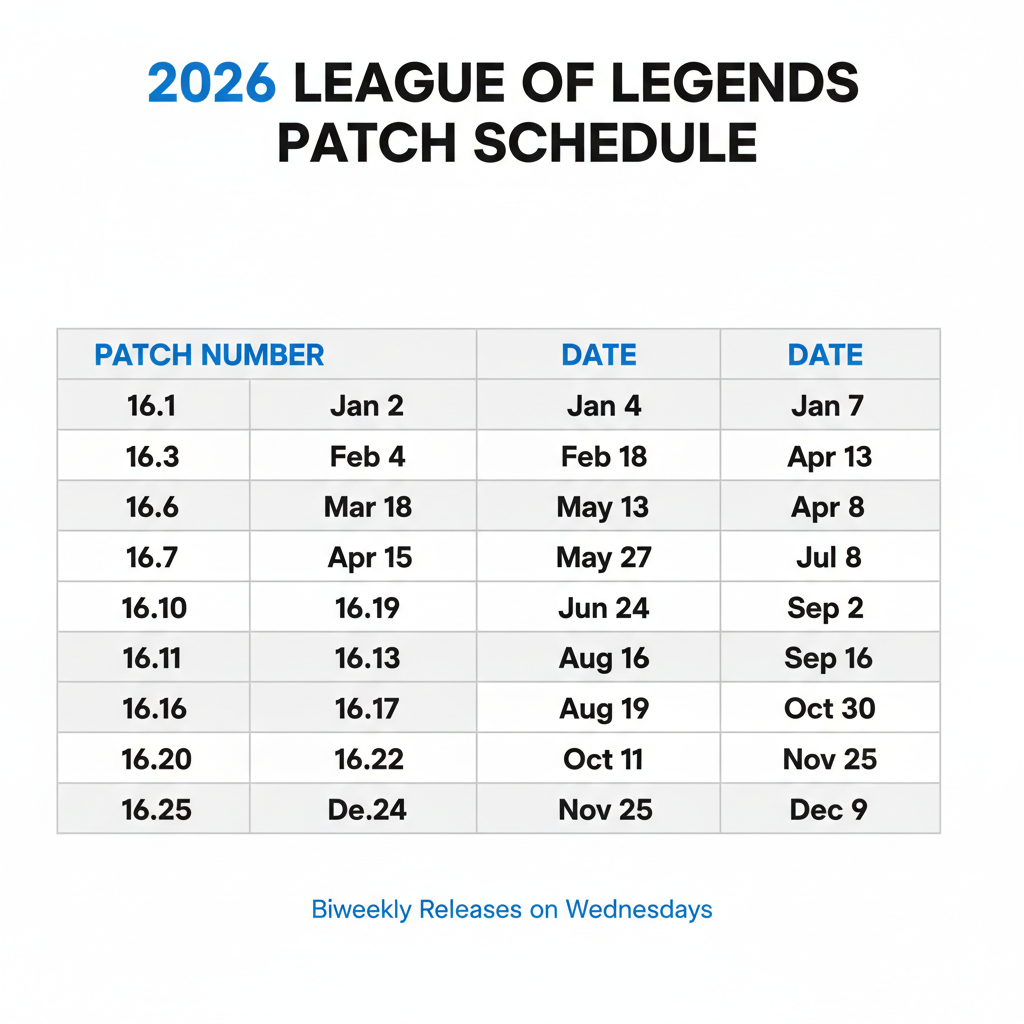
The 2026 Patch Schedule and What’s Coming Next
Riot ships 24 patches across 2026, landing every other Wednesday. Here’s a snapshot of the recent cycle:
| Patch | Release Date | Notable Content |
|---|---|---|
| 26.05 | March 4 | Mid-season item adjustments |
| 26.06 | March 18 | Shyvana rework goes live |
| 26.07 | April 1 | Demacia Rising finale, support changes |
| 26.08 | April 15 | Viego buffs, Karma/Mundo nerfs |
You can track exact dates on the Riot Support patch schedule page. Dates shift occasionally, so check a day or two before each expected drop.
Patch 26.8 is dropping tomorrow as I write this. The previews show Viego getting buffed, which could shake up the jungle meta entirely (some analysts at Hotspawn are already calling it potentially broken). Meanwhile, Mel and Mundo are getting nerfed. If you’re a top lane player who’s been abusing Mundo, read those notes carefully.
FAQ
How often are League of Legends patch notes released?
Riot ships a new patch every two weeks, landing on Wednesdays Pacific Time. That means roughly 24 patches per year. Dates can shift, so check Riot’s official patch schedule page a day or two before each expected drop.
Where can I find the latest League patch notes?
The official source is leagueoflegends.com/en-us/news/tags/patch-notes/. You can also find breakdowns on Mobalytics and u.gg, which add win-rate context and tier list impacts to help you interpret what each change actually means on the Rift.
What is the current LoL patch in 2026?
As of mid-April 2026, the live patch is 26.7, which dropped on April 1. Patch 26.8 is expected to hit live servers on April 15, 2026, with Viego buffs and continued Karma nerfs.
Do patch notes affect my ranked games immediately?
Yes. Once a patch goes live, every ranked game uses the updated balance. That’s why reading league of legends patch notes before you queue is critical. If your main got nerfed, you want to know before you lose LP finding out the hard way.
What does “adjusted” mean in LoL patch notes?
Adjusted means the champion got power shifted rather than straight buffed or nerfed. Riot moved stats around, like lowering base damage but increasing scaling. The champion isn’t strictly stronger or weaker, just different. Test the new feel in a normal game first.
Patch notes aren’t just a blog post from Riot. They’re the playbook for every ranked game you’ll play for the next two weeks. Read them, cross-reference win rates, and you’ll spot the meta faster than the players still banning last patch’s OP picks. If you want to climb while the ladder is still adjusting, check out Playplex’s LoL rank boosting to push past the ranks where nobody reads patch notes at all.