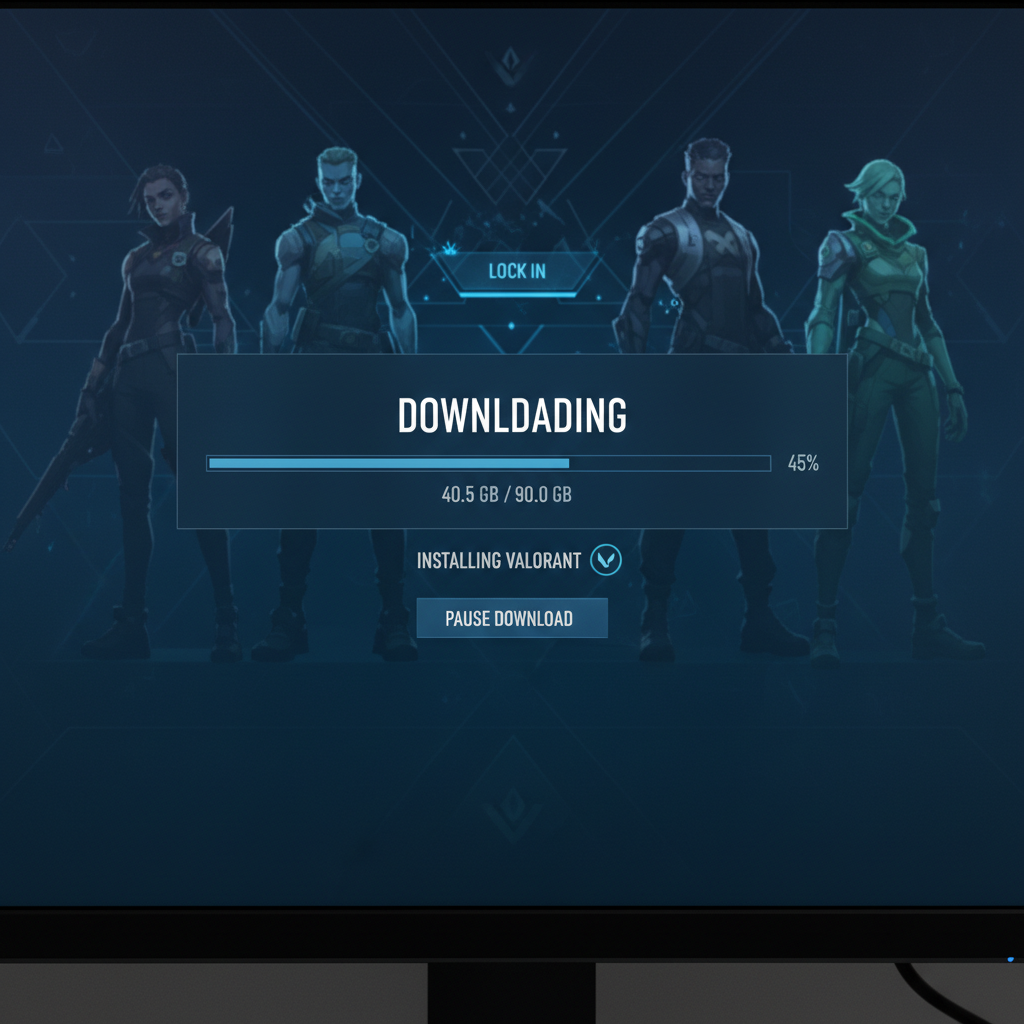
Valorant looks tiny on paper and chonky on your SSD. I cleared space for a fresh install last weekend, and the number that hit my drive wasn’t the one Riot’s installer promised.
Last updated: April 14, 2026 , patch 12.06.
How big is Valorant on PC, PS5, and Xbox in 2026?
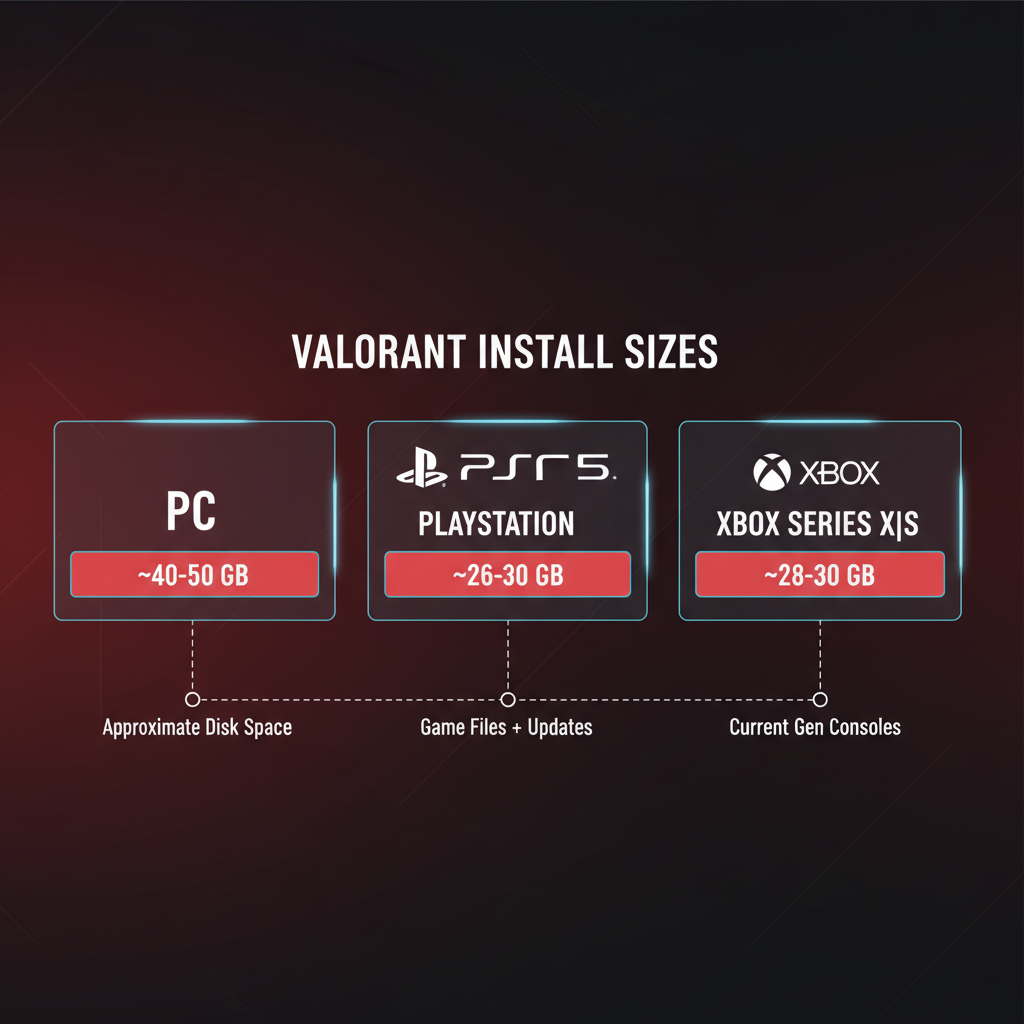
Valorant on PC sits around 40 to 50 GB installed after the Unreal Engine 5 upgrade, though the initial Riot Client installer is only 66 MB. PS5 runs about 26 to 30 GB, Xbox Series X|S closer to 28 to 30 GB. Leave 70 GB free for patches.
Those are real-world numbers pulled from my own Steam-free SSD and cross-checked against Dot Esports’ install-size breakdown. Your mileage varies by region, language voice packs, and whether you’ve installed every agent skinline over time.
If you’re on a 500 GB laptop drive with Warzone, GTA 6, and a Steam library, you already know the pain. Budget 70 GB. Thank yourself later.
Why is Valorant’s download so different from its install size?
Short answer: the Riot Client lies to you. On purpose.
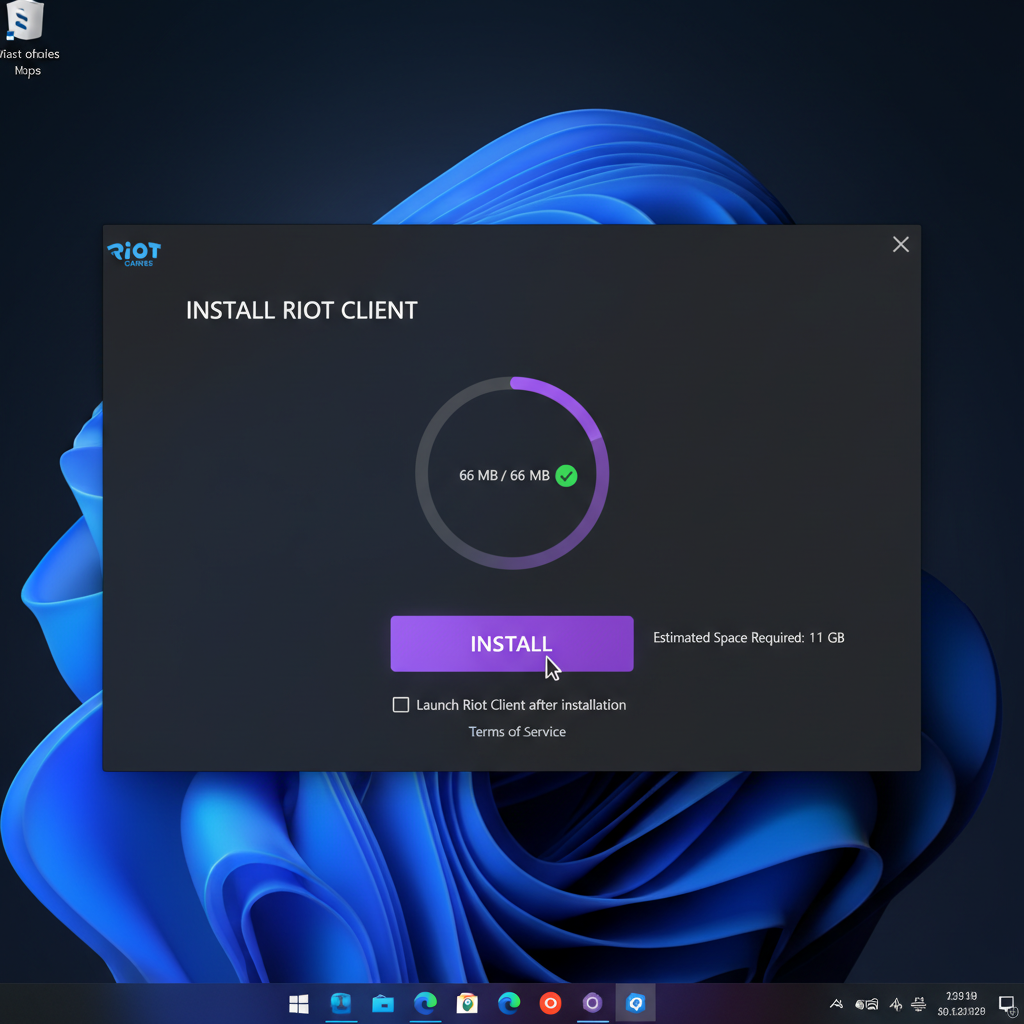
When you click install, Windows sees a stub file around 66 MB. That’s just the bootstrapper. The actual game pulls down in the background once you open the client, expanding to 40 to 50 GB on disk. My install hit 44.8 GB on a clean patch 12.06 setup, and then Vanguard added another chunk on first reboot.
Riot does this because Valorant is a live-service title that ships changes every two weeks. If you’re the kind of player who grinds ladder every season, you’ve felt this. I’ve had patches as small as 1.8 GB and as fat as 6.4 GB when an Act flips over. The 12.00 patch in January 2026 was the biggest install bump I can remember , my drive jumped by nearly 7 GB that night.
Big difference between “download” and “install.” Worth knowing before you start the process on a hotel WiFi.
How much space do Valorant patches actually eat?
Regular balance patches stay around 2 to 3 GB. Bigger Act launches with new agents, map pools, or mode reworks push 5 to 8 GB. Here’s roughly how the last six months shook out on my drive (I keep a log because I’m a nerd):
- Patch 12.01 (Waylay tuning): 2.1 GB
- Patch 12.02 (bug fixes): 1.7 GB
- Patch 12.04 (Breeze rework groundwork): 5.3 GB
- Patch 12.05 (agent Miks debut, March 17, 2026): 6.8 GB
- Patch 12.06 (Waylay tweaks, March 31, 2026): 2.4 GB
According to Inven Global’s Season 2026 writeup, patch 12.05 shipped the Bandit sidearm, a Breeze rework, the new MMR overhaul, and the All-Random Showdown mode. That’s why it hit so hard on disk. Makes sense.
Hot take: I think Riot’s going to start shipping optional agent-skin language packs as separate downloads by end of 2026. Install sizes are creeping, and players on 256 GB handheld builds are complaining on Reddit every Act launch. Could be wrong. Watch the patch notes.
Did the Unreal Engine 5 update make Valorant bigger or smaller?
The UE5 transition actually shrank Valorant on some setups. Pre-update, I had a bloated 52 GB install from carrying every skin bundle back to Reaver. Post-update, the same account rebuilt down to roughly 44 GB because Riot re-compressed textures and dumped some legacy render assets.
Still, UE5 also raised the minimum spec floor a hair. Older CPUs without AVX instructions started throwing launch errors. If you’re still playing on a potato from 2014, check Riot’s minimum spec page before you panic about the file size — your hardware might be the bigger issue.
A buddy of mine went from a 9-year-old i5-4460 to a Ryzen 5 5600 last month. His install time dropped from 41 minutes to 6. Same internet pipe. Storage speed and CPU extract time matter way more than most players realize.
Can older PCs still run Valorant in 2026?
Yes, with caveats. Riot’s published minimum spec is still shockingly low for a 2026 shooter. Core 2 Duo E8400, 4 GB RAM, and Intel HD 4000 graphics will technically boot the game at 30 FPS. I tested this on a 2011 ThinkPad for fun. It ran. Barely.
For Silver-and-up lobbies where you need actual aim, 60 FPS stable is the real floor. A Ryzen 3 1200 paired with a GT 730 hits that. 144 FPS (what most players want) needs something like a GTX 1050 Ti and an i5-9400F. Those are comfortably budget-tier parts in 2026.
If your PC’s holding you back and you just want to climb, a Valorant rank boost skips the grind while you save for a new rig. Or you can buy a Valorant account that’s already sitting where you want to be.
Is Valorant bigger than CS2 or Overwatch 2?
Nope. Not even close. Valorant’s 40-50 GB PC install is roughly half what CS2 eats after its Source 2 upgrade, and it’s well under Overwatch 2’s 50-60 GB footprint. For a free-to-play tactical shooter that ships new content every two weeks, Valorant is genuinely one of the lighter installs you can run in 2026.
Still bigger than League of Legends (~22 GB), though. Irony of the year: Riot’s newer game is double the size of their 15-year-old MOBA.
FAQ
Q: How big is Valorant on a gaming laptop with 512 GB of storage?
A: With Windows, browser cache, and one or two other games installed, you’ll want to earmark 70 GB for Valorant. The install hovers around 44 GB on patch 12.06, and Vanguard plus future patches will eat the rest. Anything under 60 GB free is asking for trouble.
Q: Does Valorant’s install size grow every Act?
A: Yes, usually by 5 to 8 GB per Act launch. New agent voice lines, map assets, and mode files all add up. Mid-Act patches are smaller (2 to 3 GB) but still stack up over the season.
Q: Can I install Valorant on an external SSD?
A: You can, but performance drops noticeably on USB 3.0 drives — longer load times, occasional asset streaming hiccups. USB-C Gen 2 or Thunderbolt external SSDs run fine. Internal NVMe is still the move if you care about fast queues.
Q: Why is my Valorant install bigger than my friend’s?
A: Usually language voice packs or legacy skin files. If you’ve played since closed beta, you may have 5 to 8 GB of cached assets your friend never downloaded. A clean reinstall trims it down.
Q: How long does it take to download Valorant in 2026?
A: On a 300 Mbps connection, expect 20 to 30 minutes for the full 44 GB. Riot’s CDN is solid in North America and EU. Extracting takes another 5 to 10 minutes depending on your storage speed.
The honest answer to how big is Valorant in 2026 is “less than you’d think, more than Riot shows you at install.” Clear 70 GB, keep your drivers updated, and you’ll be loading into Haven before your lobby’s ready to queue. If grinding solo sounds like torture, a Valorant rank boost gets you out of Elo hell while your SSD catches up.