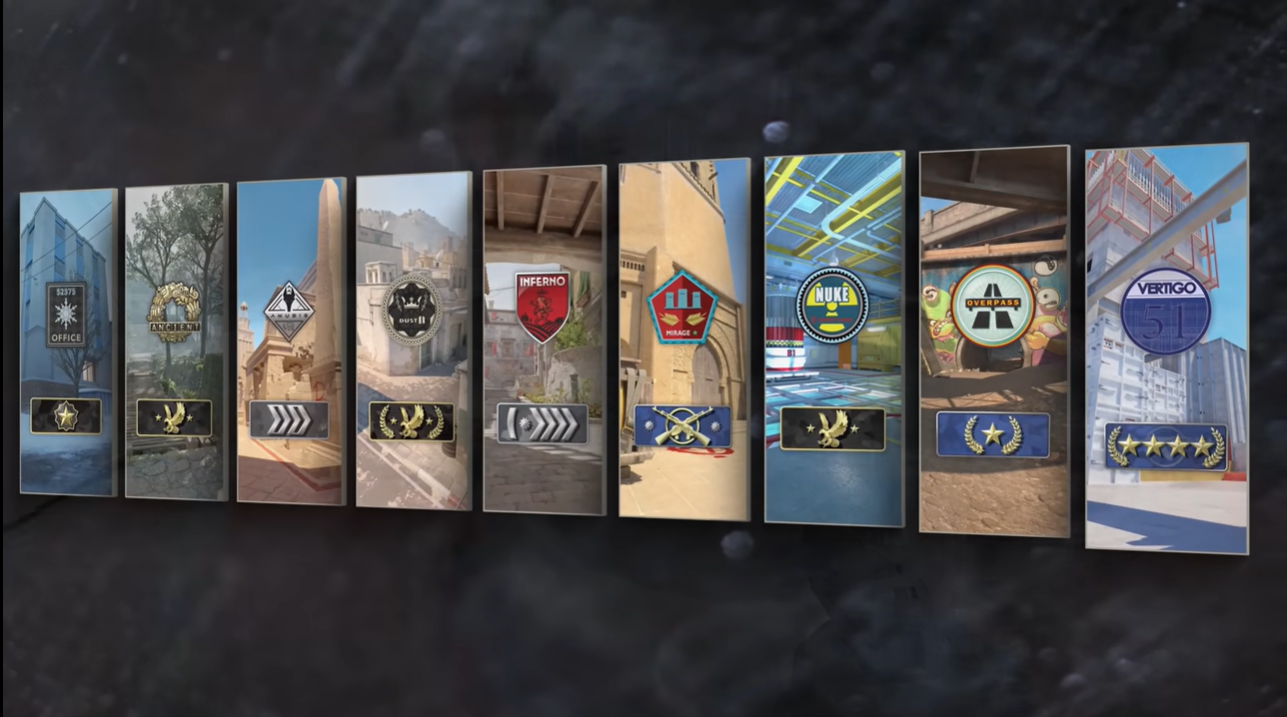
When Counter Strike 2 was released, everyone was super impressed by the changes to the ranking system. Nobody expected these big changes and it made a lot of players very happy. Before, the matchmaking rankings were boring and many players had to use FACEIT to play competitive matches. The old rankings just didn’t work well anymore. But with the new rankings in CS2, everything is better for competitive play.
The new rankings make matchmaking way more exciting and competitive again. Players don’t have to use other websites like FACEIT as much anymore. The new CS2 ranking system was a huge and awesome surprise that made the game feel fresh and fun for competitive players. It fixed a lot of problems with the old rankings and changed the game for the better. In this article, we’ll explore the changes to CS2 ranks and see how they differ from previous CS:GO ranks. If you are looking for information regarding Premier Ranking System, check out the Premier sections further down this guide.
Difference Between CS 2 and CS:GO Ranks
The CS 2 and CS:GO ranking systems work the same way. The only difference is that CS 2 gives players separate ranks for each map, while CS:GO has one rank that applies to all maps. For example, in CS 2 you could be a Global Elite on Dust 2 but a lower rank on Inferno. In CS:GO, reaching Global Elite rank means you are Global Elite on every map. So CS 2 ranks are map-specific, while CS:GO ranks apply across all maps. Valve expired every per-map Skill Group on January 21, 2026 after adjusting the rank values behind them, so an old map rank only shows again once you have the required wins on that map. Overall, the core ranking system is identical.
Also Read: CS2 System Requirements 2026: Can Your PC Run Counter-Strike 2
CS 2 Ranks
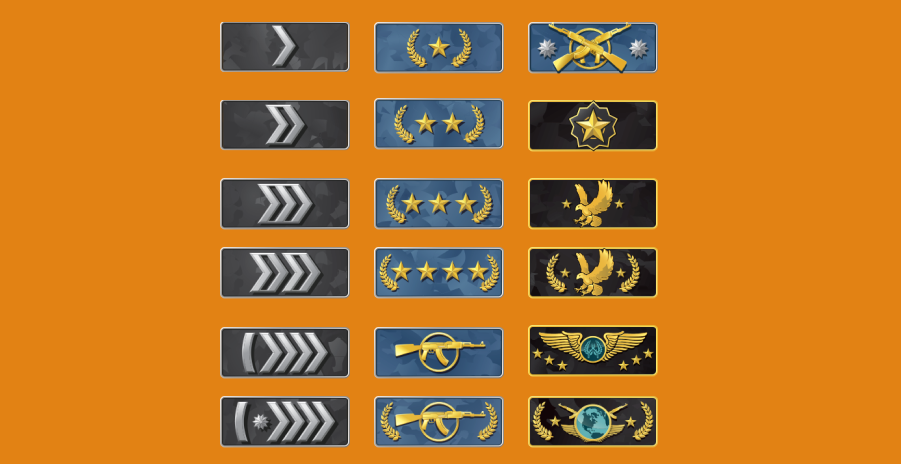
The ranking system in Counter-Strike 2 (CS 2) assigns competitive skill groups to players as they compete in matchmaking. Much like CS:GO, CS 2 uses a tiered ranking system with 18 total ranks, with Silver 1 being the lowest and Global Elite being the highest. You need Prime Status to receive a Skill Group. Here are the ranks in CS 2 ranked from lowest to highest:
Silver 1 to Silver Elite Master
The lowest rank in CS 2 is Silver 1 then comes Silver 2, 3, 4, Elite, and finally the Elite Master. These ranks represent new and less experienced players who are still learning the fundamentals of CS gameplay. Silver Ranks usually help with grouping new players together for fair matchmaking while they improve together.
Gold Nova 1 to Gold Nova Master
The next tier is Gold Nova 1 to Gold Nova Master. These ranks represent decent, developing players who have grasped the basics and fundamentals of CS 2. Gold Nova is where players start implementing more advanced tactics and thinking strategically in matches. Things like executing site takes, coordinating with teammates, and refining recoil control become important in the Gold Nova ranks. Players here have good aim and reflexes but may lack some consistency.
Master Guardian 1 to Distinguished Master Guardian
Next, we have the Master Guardian ranks which include Master Guardian 1, Master Guardian 2, Master Guardian Elite, and Distinguished Master Guardian. These ranks represent highly skilled, experienced players with excellent aim, map knowledge, and communication skills. Teamwork is crucial in the Master Guardian Ranks as players execute strats and understand economy management at a high level. Mistakes get heavily punished so resilience is key.
Legendary Eagle to Legendary Eagle Master
Moving on, a higher tier that includes Legendary Eagle and Legendary Eagle Master. These ranks represent elite players with top-tier aim, reflexes, and game sense. Teamwork and coordination are executed flawlessly. Players have mastered economy, positioning, grenade usage, and recoil control. In LE and LEM ranks, players are respected for their well-rounded abilities and leadership. They are considered professional-level and the top percent of the CS 2 community.
Supreme Master First Class to The Global Elite
Finally, we have the highest tier ranks of Supreme Master First Class and The Global Elite. These ranks represent professional-level players who dominate at the top of CS 2’s competitive environment. Global Elite players have perfect aim and reflexes, unmatched game sense and strategy, and elite-level teamwork and communication skills. They have mastered every aspect of CS gameplay and mechanics to a tee. Supreme Master First Class players are on the cusp of greatness, while Global Elites are considered legends and superstars of CS 2
Also Read: Top 10 Educational League of Legends YouTubers
Difference Between Competitive and Premier Ranks
The competitive and premier game modes have different ranking systems in CS2. In competitive, players get ranked using the standard skill group badges like Silver, Gold Nova, and Global Elite. However, premier mode uses a rating and leaderboard system instead of badges.
Premier has ratings that go up or down based on your performance each match. There are also regional and global leaderboards that show the top rated premier players. So premier measures your skill with a rating number rather than a badge. Premier attracts very skilled players aiming for the top of the leaderboards. The matches are challenging compared to competitive.
Overall, premier rankings are more in-depth but also harder to achieve compared to the standard competitive badge ranks. Both systems work well, but premier is for players who want the ultimate competitive challenge in CS2.
CS2 Premier Ranking System
CS2 Premier assigns you a numerical CS Rating after your first 10 Premier wins. CS Rating runs from 1,000 at the floor up past 30,000 at the elite global leaderboard. Every win pushes the number up, every loss drags it down, and the amount gained or lost depends on your opponents’ ratings and your own win/loss streak. The system is color-coded into seven tiers:
| Tier | CS Rating Range | Old CS:GO Equivalent |
|---|---|---|
| Gray | 1,000-4,999 | Silver I to Silver Elite Master |
| Cyan | 5,000-9,999 | Gold Nova I to Gold Nova Master |
| Blue | 10,000-14,999 | Master Guardian to MG Elite |
| Purple | 15,000-19,999 | DMG to Legendary Eagle Master |
| Pink | 20,000-24,999 | Supreme Master First Class |
| Red | 25,000-29,999 | Global Elite |
| Gold | 30,000+ | Top of the food chain |
The system punishes consecutive losses hard. Your first loss might cost you around 100 points. But after your third or fourth loss in a row, you can drop over 500 points on a single game, according to Dexerto. Win streaks work the same way in reverse, amplifying your gains the longer you keep winning.
Promotion and relegation matches trigger at every color boundary. So when you’re sitting at 14,850 and win, you’ll get a special promotion match into Purple. Lose that specific game, and you stay Blue.
Premier doesn’t let you pick your favorite map and grind it forever. That’s what Competitive mode is for. Instead, since September 22, 2026, Team 1 picks one map from the Active Duty pool, Team 2 picks two, Team 1 picks a final map, and one of those four is chosen at random. In Premier Season Five, which began on July 8, 2026, that pool is Ancient, Anubis, Cache, Dust II, Inferno, Mirage, and Nuke. Parties of four have been able to queue for Premier since November 2023, so you can queue solo, duo, trio, four-stack, or full five-stack. Every season brings a soft rating reset. Your old rating serves as a starting point, but you need 10 fresh wins to re-establish it.
How to Unlock Premier in CS2
You need three things: Prime Status ($14.99 on Steam), Profile Level 10 on your account, and ten Premier wins. Prime unlocks the queue, Level 10 proves you’re not a day-one smurf, and those wins reveal your first CS Rating.
-
Prime Status: Buy it on the Counter-Strike 2 Steam store page. If you played CS:GO and earned Prime before the transition, it carried over automatically. No Prime, no Premier.
-
Profile Level 10: This is your CS2 profile level, not your Steam level. Earned by gaining XP in any non-private mode. Deathmatch, Arms Race, Casual, and Wingman all count. Private servers and workshop maps do not. You only earn XP once you own Prime, so buy that first. Some sources will tell you that Private Rank 2 is enough, but Valve’s Prime Status FAQ says Prime and Profile Level 10.
-
Placement matches: Your CS Rating stays hidden until you’ve won 10 Premier matches. That’s 10 wins, not 10 games, so a loss just adds another match to the run.
If you already own Prime, keep playing Casual or Deathmatch until you reach Profile Level 10, then go for your ten Premier wins. How long that takes depends on your starting level and your win rate.
Conclusion
The new ranking system in CS2 makes playing competitive matches more exciting. Having separate ranks for each map is a cool new feature. It lets you show off your skills on certain maps, while still pushing to improve on all maps. The ranks put players of similar skill together for fun, fair games. Even though the basics are the same as CS:GO, the map ranks give you new goals to reach. Premier mode also adds a hardcore challenge for top players.
Overall, the rankings in CS2 make competitive play feel fresh again. There’s always a new rank to try for, whether you’re starting out in Silver or going pro in Global Elite. The system gives all players something to work towards. CS2 definitely improved competitive matchmaking and made rankings fun again. If you’re stuck on a rating plateau, a CS2 Premier boost is the quick way past it.
Also Read: Lethality in League of Legends Explained (2026)
Finished reading? Check out our services! We offer a wide selection of high-quality League of Legends accounts. With our premium Smurf accounts, you can jump into the game with an advantage, skipping the grind and unlocking new opportunities.